


Translate:
What’s New
Equal Pay Day - Ontario - April 11, 2017
Women STILL need to
work well into the second quarter of the year to
make the same income as men in the previous
year.
Despite progressive
legislation to overcome the undervaluing of
traditionally female occupations, the gap in income
persists.
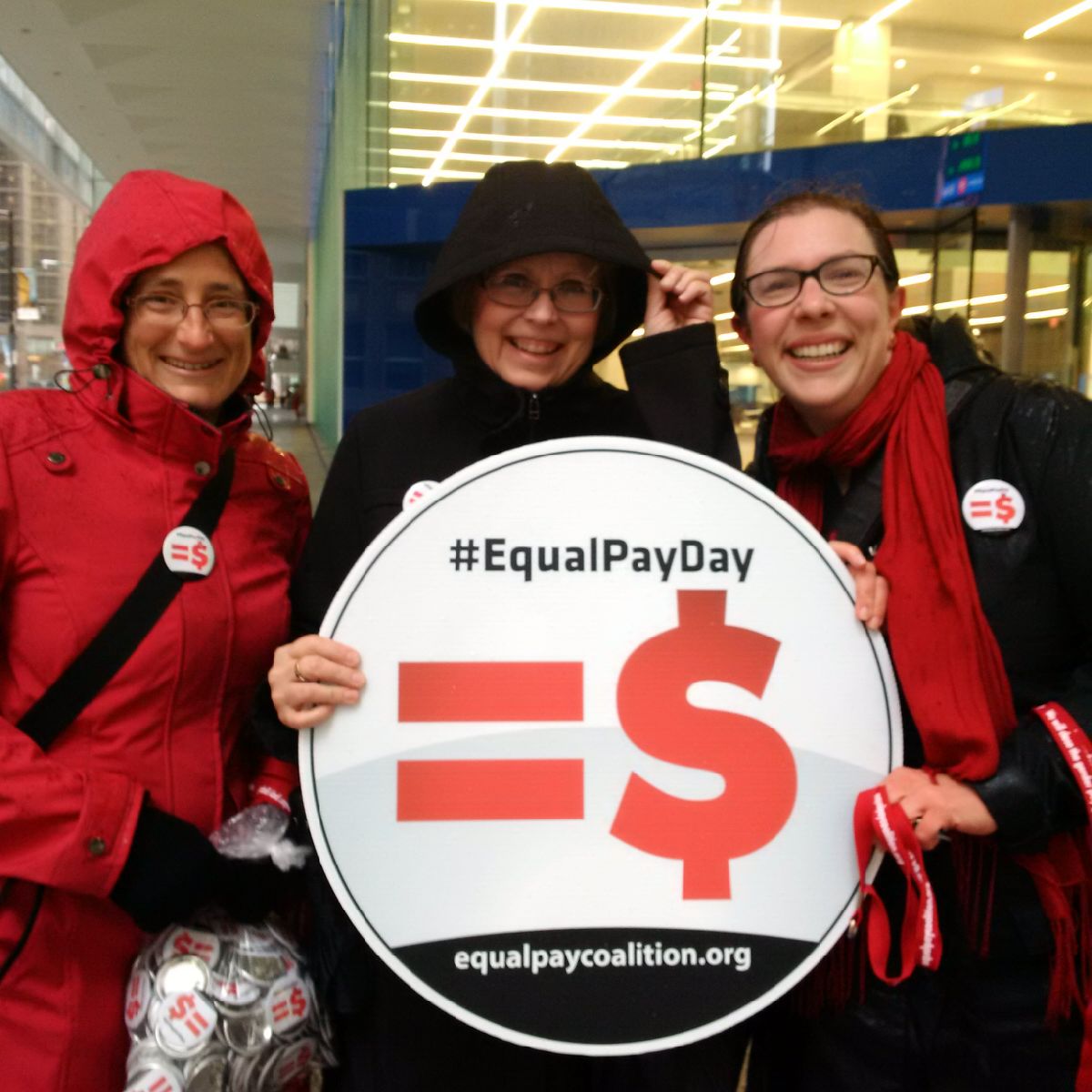
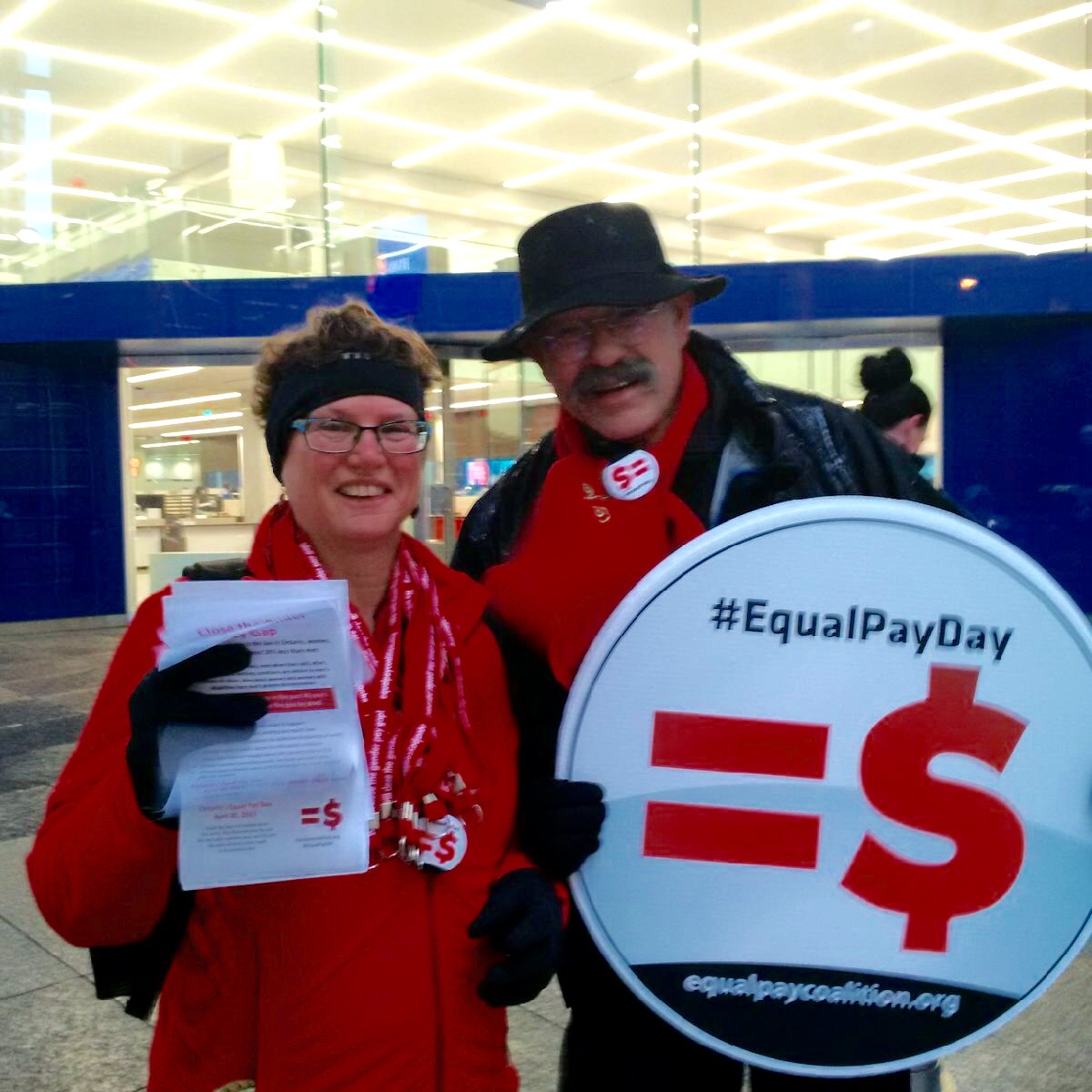
Some recent reports on the wage gap, which may even be larger for women in professions than in service work, are highlighted in the link below:
https://beta.theglobeandmail.com/news/national/gender-pay-gap-a-persistent-issue-in-canada/article34210790
http://www.theprovince.com/business/local+business/gender+wage+canada+nearly+twice+global+average+says/12891866/story.html
http://www.newswire.ca/news-releases/opseu-president-demands-premier-take-action-on-pay-equity-613989343.html
http://ottawacitizen.com/news/national/liberals-promise-proactive-pay-equity-legislation-to-close-wage-gaps
http://www.newswire.ca/news-releases/opseu-president-demands-premier-take-action-on-pay-equity-613989343.html
http://ottawacitizen.com/news/national/liberals-promise-proactive-pay-equity-legislation-to-close-wage-gaps
You can read the blog at: http://behindthenumbers.ca/2015/04/19/ontario-equal-pay-day-best-place-for-women/
The Equal Pay Coalition (Ontario)
has extensive documentation of the wage gap and
ways to reduce it. Check this site:
http://www.equalpaycoalition.org to see reports
and some creative videos illustrating the problem-
and some of the solutions.
We have the reports- but we are still are waiting
for the Ontario government's promised Gender Gap
Reduction Strategy.
Report on discrimination against
trans people
A US report
released in February 2015 documents the
discrimination and barriers faced by transgender
people. I am glad to see it includes an
interesting intersectional analysis. The
report's overall focus is the financial penalty
transgender and other gender-nonconforming people
pay in employment and housing. It specifically
identifies levels of employment discrimination and
income inequality by race (see Figure 3).
Not surprisingly, the greatest compound effect is
on black people.
Here is the
summary:
http://www.lgbtmap.org/unfair-price-transgender
The entire report
can be downloaded from that site.
It has a very
accessible layout and although it is US-based,
many of the findings are relevant to the Canadian
context.
Spring 2015
Daina Green is
now recognized as a Gender Specialist and listed
on the Roster of Experts in Gender Equality and
Women's Empowerment in Public Administration
by the United Nations Development Program (UNDP).
Fall 2014
http://www.thestar.com/news/queenspark/2014/10/01/ontario_to_tackle_gender_wage_gap.html
Ontario to tackle
gender wage gap
Kathleen Wynne
orders Ontario’s labour minister to draft a plan
to close the wage gap between men and women.
By: Laurie
Monsebraaten Social justice reporter,
Published on Wed Oct 01 2014
The Ontario government is finally responding to the Equal Pay Coalition's pressure to address the gender wage gap in this province. The recent Toronto Star article and editorial talk about the need for all government ministries to develop a strategy to end gender discrimination, in particular to close this outrageous gap.
Read the Toronto Star's op-ed here:
http://www.thestar.com/opinion/editorials/2014/10/02/ontario_is_right_to_address_pay_equity_gap_editorial.html?app=noRedirect